

SBS Modified Bitumen in Toronto: Common Problems, Lifespan & When It Fails
If your building has a 2-ply torch-down roof, there's a decent chance it's SBS modified bitumen. It's still the default membrane on a huge share of Toronto's commercial and industrial low-slope roofs, and for good reason: it's forgiving to install, it performs well in this climate when it's done right, and contractors here know it inside out. But "well understood" isn't the same as "problem-free."
This guide is for Toronto and Etobicoke property managers, facility managers, and asset managers who are either dealing with an SBS roof that's starting to show its age, or weighing SBS against other systems for a new install. We're not going to tell you SBS is the best system for every building, because it isn't. We're going to tell you what actually goes wrong with it, when, and why, so you can make a call based on your roof's condition instead of a sales pitch.
Why SBS 2-Ply Is Still Dominant in GTA Commercial Roofing
SBS (styrene-butadiene-styrene) modified bitumen has been the workhorse membrane for commercial flat roofs in Ontario for decades, and it's held that position for practical reasons rather than nostalgia.
A properly installed 2-ply SBS system is genuinely well-suited to our freeze-thaw climate. The rubberized modifier gives the membrane flexibility at low temperatures, which matters when a roof deck is cycling through freezing and thawing dozens of times over a Toronto winter. It's also a familiar system: most experienced GTA roofing crews have installed hundreds of torch-on roofs, so workmanship variance tends to be lower than it is with newer single-ply systems that require specific training most crews haven't had.
Cost is another factor. SBS 2-ply typically installs for less per square foot than PVC or TPO single-ply systems, which makes it attractive for REITs and property managers working within tight capital budgets across a large portfolio.
None of that means SBS is invincible. It means SBS is a known quantity, and known quantities fail in known, predictable ways, which is exactly what this post covers.
Realistic SBS Lifespan in Toronto
Manufacturers will quote SBS modified bitumen lifespans of 20 to 30 years. In the GTA, on a real roof, with real foot traffic, real ponding, and real winters, the honest number is closer to 15 to 20 years for a 2-ply torch-down system, and that's assuming a competent installation and at least basic maintenance.
A few things push that number in either direction:
Installation quality. Torch-applied seams are operator-dependent. A rushed or undertrained crew can install a roof that looks fine on day one and starts failing at seams within five to seven years.
Roof traffic and rooftop equipment. Buildings with regular HVAC servicing, satellite dishes, or maintenance foot traffic see accelerated wear around access paths, regardless of membrane quality.
Drainage. Ponding water is the single biggest lifespan killer on a flat SBS roof. Areas with standing water for 48 hours or more after rainfall age significantly faster than well-drained sections of the same roof.
UV and granule protection. Cap sheets with mineral granules hold up better against UV degradation than smooth-surfaced membranes, which is worth knowing if you're comparing quotes on a new install.
If your SBS roof is past year 15 and you haven't had a proper condition assessment, that's the point to get one, not year 20 when you're already dealing with active leaks.
Common Problem #1: Seam Defects

Seams are where torch-down roofs fail first, and it isn't close. A 2-ply SBS system depends entirely on a consistent bitumen weld between overlapping sheets, and that weld is created by hand, in the field, with an open flame, often on a schedule.
The most common seam issues we find on Toronto roofs:
Cold welds, where the torch didn't sufficiently melt the bitumen before the sheets were rolled together, leaving a bond that looks sealed but separates under thermal movement.
Fish mouths, small gaps or bubbles at the seam edge where the sheet lifted before the bitumen set.
Insufficient overlap, usually a shortcut taken to stretch material coverage, which leaves a seam with less bonding surface than the manufacturer's spec calls for.
Seam failures rarely announce themselves right away. They show up months or years later as slow leaks that seem to move around the building, because water travels along the underside of the membrane before it finds a way through the deck. If your maintenance team is chasing a leak that never seems to be in the same spot twice, seams are the first place to look.
Common Problem #2: Punctures & Foot Traffic Damage

SBS membranes are tough, but they're not immune to point loads. Punctures on commercial roofs almost always trace back to one of a few sources: dropped tools during HVAC servicing, debris left on the roof surface that works its way through under foot traffic, or improperly placed equipment pads that concentrate weight on a small area of membrane.
The tricky part with punctures on modified bitumen is that they're often small enough to go unnoticed during a casual walk-through, but large enough to let water in during heavy rain. A pinhole puncture near a mechanical unit is one of the most common leak sources we get called out for on industrial buildings with active rooftop equipment.
If your building has regular rooftop equipment servicing, designated walk pads along access routes aren't a luxury. They're the difference between a membrane that lasts its full service life and one that's full of pinholes by year eight.
Common Problem #3: Blisters
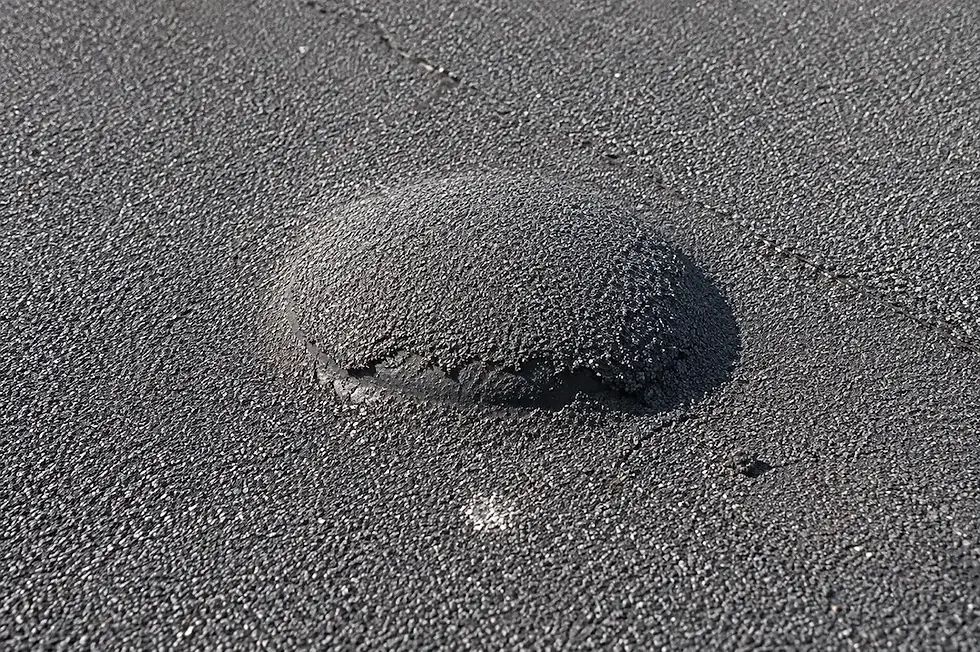
Blisters are pockets where the plies of the membrane have separated, usually because moisture or trapped air got between layers during installation and then expanded under heat. On a hot summer day, you'll see them as raised, bubble-like sections of the roof surface.
Small blisters are mostly cosmetic and don't necessarily need immediate action. The problem is that blisters weaken the membrane at that location, and repeated thermal cycling, which the GTA gets plenty of between summer highs and winter lows, causes them to grow and eventually crack open. Once a blister splits, it becomes a direct entry point for water.
Blistering is also a useful diagnostic clue about how the roof was installed. Widespread
blistering across a roof section usually points to moisture that got trapped in the substrate or between plies during the original torch-down application, which is an installation issue, not a material defect.
Other Failure Modes (Granule Loss, Edge Curl, Ponding Distress)
Beyond the big three, a few other issues show up consistently on aging SBS roofs across Toronto:
Granule loss. The mineral granules on a cap sheet protect the underlying bitumen from UV degradation. As they wear away, usually first at high-traffic areas and roof edges, the exposed bitumen becomes brittle and cracks faster. Bald patches on a cap sheet are a sign the roof's UV protection is compromised in that spot.
Edge curl and flashing lift. Perimeter details and edge metal take the most thermal movement on the roof. When flashing details weren't installed to spec, or sealants have aged out, edges lift and create an entry point that's easy to miss from ground level.
Ponding distress. Beyond just aging the membrane faster, standing water accelerates blister formation and puts sustained hydrostatic pressure on any weak seam or flashing detail nearby. If ponding areas correlate with your leak history, that's not a coincidence.

The Real Disadvantages of SBS Modified Bitumen in Toronto
Every membrane system has trade-offs. Most contractors will happily tell you why SBS is a great fit for your building and skip the rest of this conversation. Here's the rest of it.

Torch fire risk (insurance implications)
Torch-applied SBS installation involves an open flame directly on or near a roof deck, often close to insulation, existing membrane layers, and rooftop equipment. It's a well-managed risk on jobs with proper fire watch protocols, but it's a real one, and it's not going away. Some insurers now ask specific questions about installation method for roof replacements and may apply different terms depending on whether a torch-applied or cold-applied/self-adhered system was used. If your building's insurer has flagged this, it's worth having that conversation before you lock in a system, not after the roof is installed.
Heat absorption
Standard black or dark-surfaced SBS cap sheets absorb significant solar heat, which shows up as higher summer cooling loads for the building below and faster thermal aging of the membrane itself. Reflective or granulated cap sheet options exist and reduce this, but they typically cost more and aren't always what gets quoted by default.
Weight
A 2-ply SBS system with a gravel or ballasted surface adds meaningful dead load to a roof deck compared to lighter single-ply alternatives. For most standard commercial decks this isn't an issue, but for older buildings, or any structure where you're considering adding rooftop solar or additional HVAC equipment, the structural math matters. This is a conversation for a structural engineer, not a roofing quote.
Smoke and odour during install
Torch-down installation produces noticeable smoke and bitumen odour, which can be a real problem for occupied buildings, especially anything with fresh-air intakes near roof level, medical or lab tenants, or food service operations. Cold-applied or self-adhered modified bitumen systems avoid this, but they come with their own cost and performance trade-offs worth discussing with your contractor.
2026 SBS Cost in the GTA
Pricing varies with roof access, deck condition, number of plies, insulation requirements, and flashing complexity, but as a general reference point for Toronto commercial projects in 2026, a fully specified 2-ply SBS torch-down system with tear-off and tapered insulation generally lands in the $8 to $14 per square foot installed range. Broader GTA flat roofing pricing across membrane types spans roughly $5 to $17 per square foot depending on complexity, and a heavier 3-ply system built to meet current insulation code requirements can push toward $20 per square foot. Material-only roll pricing for a standard 100 sq ft base or cap sheet generally runs somewhere between $75 and $150 per roll depending on thickness and granule finish, though this fluctuates with asphalt and oil markets.
These are ballpark figures, not a quote. The only way to get an accurate number for your building is a site assessment, because deck condition and drainage issues, both of which are extremely common on older GTA commercial roofs, are usually what separate a straightforward reroof from a much more involved project. See the reference links at the bottom of this post for the material and cost-data sources behind these figures.
How to Vet an SBS Installer in Toronto
Because SBS performance depends so heavily on installation quality, the contractor matters more with this system than with most. A few things worth checking before you sign a contract:
Torch-applied experience specifically, not just general roofing experience. Ask how many torch-down square feet the crew has installed in the last two years.
Fire watch protocol in writing, including who's responsible and for how long after work stops each day.
Manufacturer certification for the specific SBS system being quoted, which affects whether you get a manufacturer-backed warranty or just a workmanship warranty from the contractor.
References on comparable buildings, ideally with a roof that's now five-plus years old so you can see how the seams and flashings have actually held up, not just how the roof looked on install day.
If a contractor can't speak specifically to seam welding technique, fire watch procedure, or drainage assessment before they've even seen your roof, that's worth noting.
When to Repair SBS vs Replace

This is the question that actually matters for most property managers reading this, and the honest answer is: it depends on where the damage is, not just how much of it there is.
Localized seam failures, isolated punctures, and small blisters are almost always repairable, often at a fraction of replacement cost, provided the rest of the membrane and the deck underneath are in reasonable shape. A roof with scattered, contained issues at year 10 to 14 is usually a repair-and-monitor situation.
Widespread granule loss across most of the roof, blistering that's showing up in multiple unrelated areas, chronic ponding that repair work hasn't resolved, or a roof that's already past 18 to 20 years and showing any of the above are signs you're managing decline rather than fixing problems. At that point, repeated repairs start costing more over two or three years than a planned replacement would have, and you're carrying leak risk the whole time.
An infrared scan is the most useful diagnostic tool for making this call objectively, since it shows trapped moisture in the roof assembly that isn't visible from a surface walk, which is often the real deciding factor between "repair this" and "replace this."
Got an SBS roof showing signs of failure? Crown does SBS-specific assessments across Toronto and Etobicoke. Repair-ready or replacement-ready, we'll tell you which one you're actually looking at, and why, before any work gets scheduled. Crown Industrial Roofing has been assessing and installing SBS and built-up roof systems across the GTA for close to 50 years, and if your roof needs a repair rather than a full replacement, that's what we'll recommend.
FAQ
What are three common problems you'll find on modified bitumen roofs?
The three most common problems on modified bitumen roofs are seam defects (cold welds, fish mouths, and insufficient overlap at torch-applied seams), punctures and foot traffic damage from dropped tools, debris, or equipment servicing, and blisters caused by trapped moisture or air between the plies that expand and eventually crack under repeated thermal cycling.
What is the lifespan of a modified bitumen roof?
Manufacturers typically rate SBS modified bitumen roofs at 20 to 30 years, but in a climate like Toronto's, with real foot traffic, ponding, and freeze-thaw cycling, a realistic service life for a 2-ply torch-down system is closer to 15 to 20 years, assuming quality installation and regular maintenance.
What are the disadvantages of modified bitumen roofing?
The main disadvantages are the fire risk associated with torch-applied installation, which has insurance implications for some buildings, higher heat absorption from dark cap sheet surfaces, added structural weight compared to single-ply systems, and smoke and odour during installation that can be disruptive for occupied buildings.
How much does a roll of modified bitumen cost?
Roll pricing for modified bitumen material typically falls between roughly $65 and $150 per roll (100 sq ft coverage), depending on thickness, granule finish, and supplier, though pricing fluctuates with bitumen and oil markets. Full installed cost for a 2-ply SBS system in the GTA generally runs $8 to $14 per square foot as of 2026.
References (2026 Cost Data)
The pricing figures in the "2026 SBS Cost in the GTA" section and FAQ are informed by:
IKO Industries - SBS Modified Bitumen Roofing Systems (Canadian manufacturer, headquartered in Toronto; product line and specification reference)
Home Depot - SBS Modified Bitumen Roll Roofing (current retail roll pricing benchmark, roughly $65 to $140 per 100 sq ft roll depending on base/cap sheet and thickness)
HomeGuide - 2026 Modified Bitumen Roof Cost Guide (independent cost-data aggregator, national installed price ranges)
Sources 2 and 3 reflect broader North American retail and installed pricing; the GTA per-square-foot range above was adjusted upward to reflect Toronto-area commercial labour rates, which typically run higher than national averages. Confirm current material pricing with your supplier and get a site-specific quote before budgeting a project.
Crown Industrial Roofing
227 Queens Plate Dr Unit #3, Etobicoke, ON M9W 6Z7
Tel: 416-744-7788 | info@crownroofing.ca


Comments