

Flat Roof Insulation for Canadian Buildings
Updated: Dec 17, 2025
Sometimes the first signs of roof insulation problems show up inside the building, not on the roof. You might notice the space feeling colder than before, heating bills slowly going up, or small patches of moisture near ceilings or equipment. When these changes start happening, it’s often a sign that the flat roof insulation isn’t working as well as it should.
In Canada, insulation matters more than many people realize. Our winters are long, snowy, and bitterly cold. Without proper insulation, heat escapes fast, and the building becomes harder to keep warm. At Crown Industrial Roofing, we deal with flat roofs every day, and we see how much difference insulation can make. A properly insulated roof helps keep heat inside, protects the building from condensation, and improves the overall lifespan of the roof.
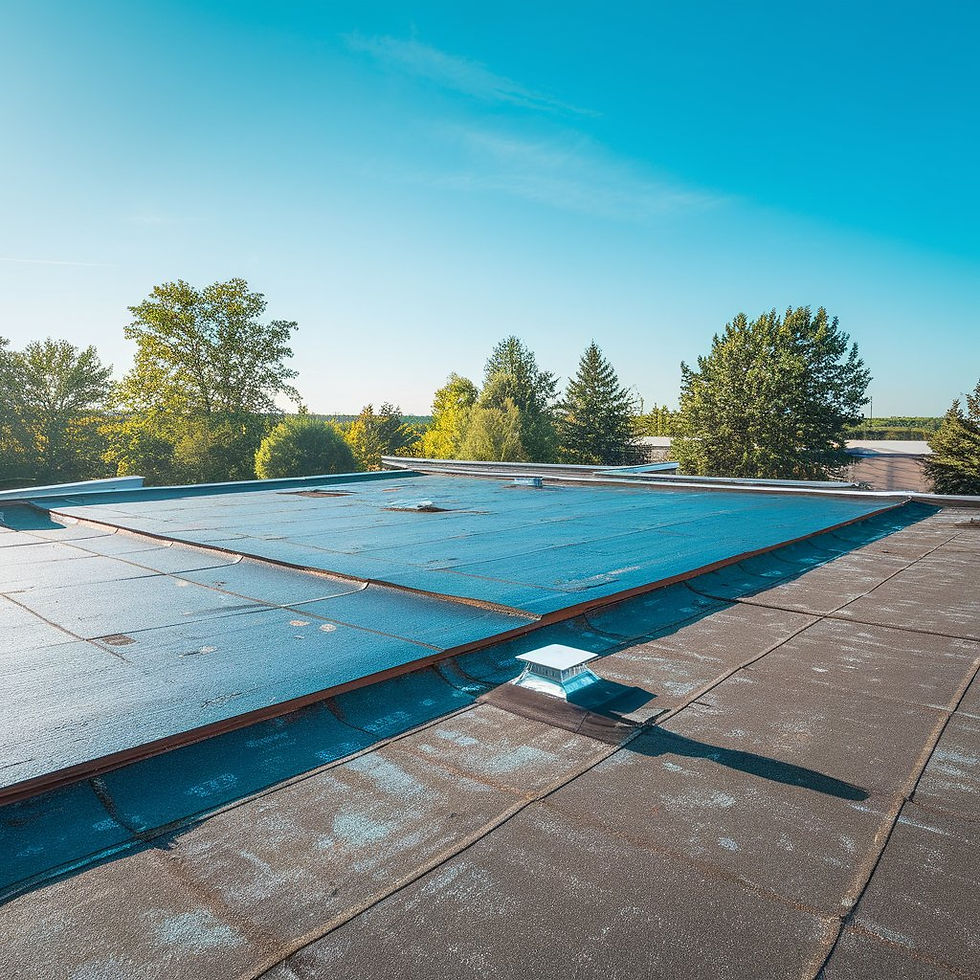
Why Flat Roof Insulation Matters in Canadian Weather
Canadian weather is tough on any roof, especially a flat roof. Snow, freezing rain, and freeze-thaw cycles can slowly wear down roofing systems. When insulation is weak or missing, buildings lose heat, and HVAC systems must work much harder.
Proper insulation helps in many ways:
Reduces heat loss during winter
Keeps indoor temperatures more consistent
Helps limit moisture and condensation
Supports better flat roof drainage
Helps extend the life of the roofing materials
Many building owners first realize something is wrong when heating bills jump unexpectedly or when certain rooms feel warmer or colder than others. Some even spot frost or dampness beneath the roofing layers. These are early warning signs that the insulation needs to be checked.
Different Types of Flat Roof Insulation
Commercial buildings are not all built the same, and neither are their roofs. Because of that, insulation needs can vary. These are some of the most commonly used insulation types for flat roofs in Canada.
Polyisocyanurate (Polyiso)
Polyiso is one of the most popular options because it performs well in cold climates. It has a high insulation value and works with most modern flat roofing systems.
Extruded Polystyrene (XPS)
XPS insulation is strong and resistant to moisture. It is useful on roofs that see foot traffic or have mechanical units, walkways, or areas where water sometimes sits.
Closed-Cell Spray Foam (SPF)
Spray foam creates a tight seal that helps prevent air leaks. It is helpful when the roof surface is uneven or when the building needs extra air sealing.
Tapered Insulation Boards
Many flat roofs do not naturally drain water well. Tapered insulation helps create a slope, so water moves toward drains instead of staying still on the roof.
Warm Roof and Cold Roof Designs
Performance can change depending on the method used to install the insulation.
In a warm roof system, the insulation is installed above the roof deck. This creates a smooth, uninterrupted thermal layer that helps prevent condensation. It’s a popular choice for modern commercial buildings in Canada because it delivers strong and consistent energy performance.
In a cold roof system, the insulation sits below the roof deck. This design depends on good ventilation to stop moisture from building up. Many older buildings still have this setup, and improving the insulation can often make a noticeable difference in comfort and efficiency.
How to Install Insulation: Inside or Outside
There are several ways to install flat roof insulation, and the right method depends on the building and the project.
Insulating a flat roof from the outside: This approach is commonly used during a roof replacement or major repair. It provides stronger long-term performance and is often considered the most effective way to insulate a flat roof.
Insulating a flat roof from the inside: In some cases, the roof can’t be opened from above, so interior installation becomes the only choice. When this method is used, managing moisture and ventilation becomes even more important.

Energy Efficiency and R-Value Expectations
R-value measures how well insulation stops heat from escaping. Since the Canadian climate is cold, commercial flat roof insulation often requires a higher R-value. The better the R-value, the more heat the building can retain.
Insulation with a higher R-value can:
Lower heating and cooling bills
Improve indoor comfort
Help the building stay warm longer
Support the long-term performance of the roofing system
Choosing the right insulation helps save money over time, especially for large buildings.
Problems Caused by Poor Insulation
When a flat roof is not insulated properly, a few problems tend to show up.
These may include:
Condensation and moisture buildup
Higher heating expenses
Cracking from freeze-thaw cycles
Standing water from uneven roofing layers
Mould or damp areas inside the building
Even a small issue can grow into something expensive to repair if it is ignored. Insulation plays a big role in preventing these problems.

How Crown Industrial Roofing Helps
Crown Industrial Roofing starts with a detailed roof inspection. When we check a roof, we look at the insulation, moisture, and any areas where heat may be escaping. After that, we suggest insulation options that make sense for the building and its condition.
Some of the work we handle includes:
Flat roof inspections
Moisture detection
Planning repairs or replacements
Installing the right insulation
Long-term roof care and maintenance
At the end of the day, our focus is to protect your building, lower energy waste, and help the roof hold up better through Canadian weather.
Final thoughts...
When a flat roof is well-insulated, the improvement is noticeable. The building stays warmer, moisture problems are reduced, and the roofing system lasts longer. Quality insulation can also support overall roof load capacity , which is especially important during heavy rain, snow, and the seasonal weather changes we experience in Canada.
Because of these benefits, many commercial property owners choose to upgrade their insulation. Crown Industrial Roofing works with businesses throughout Toronto and nearby regions to help them select the right insulation and ensure it’s installed the right way.
To learn more or book an inspection, contact Crown Industrial Roofing today.


Comments